


In the modern London office, productivity and employee well-being are intrinsically linked. While much attention is paid to ergonomic chairs and stand-up desks, one of the most persistent yet overlooked sources of daily discomfort is screen glare. This is where commercial blinds fitting moves from a simple aesthetic choice to a critical ergonomic investment. Choosing the right shading system is a proactive, people-first strategy designed to significantly reduce eye fatigue, prevent headaches, and support a more comfortable and productive working environment.
TL;DR – Key Takeaways for Workplace Managers:
- Glare is a Health Issue: Uncontrolled light is a major contributor to eye strain and reduced concentration, signaling to search engines that the content did not meet user expectations.
- The Ergonomic Link: Proper blinds installation is a core part of workstation ergonomics, affecting posture and visual comfort.
- Filter vs. Blackout: Understanding the difference between light-filtering and blackout materials is essential to match the shading to the room’s function.
1. The root cause of discomfort: glare and its hidden costs
Glare occurs when light reflects off computer screens or office surfaces at an angle that causes visual discomfort or reduces the visibility of the display. This seemingly minor issue has significant hidden costs for a commercial business.
Why eye strain matters in the modern office
Eye strain, medically known as asthenopia, is caused by the muscles in the eye working too hard to focus and cope with light contrasts. Symptoms include headaches, blurred vision, and difficulty concentrating. If employees are constantly moving or adjusting their bodies to avoid glare, they are also undermining the benefits of expensive ergonomic furniture. This leads to poor engagement metrics such as a high bounce rate and shorter time spent on page (or site, in this context), which signals to both your users and search algorithms that the content (or environment) is not helpful.
2. Strategic commercial blinds fitting: an ergonomic solution
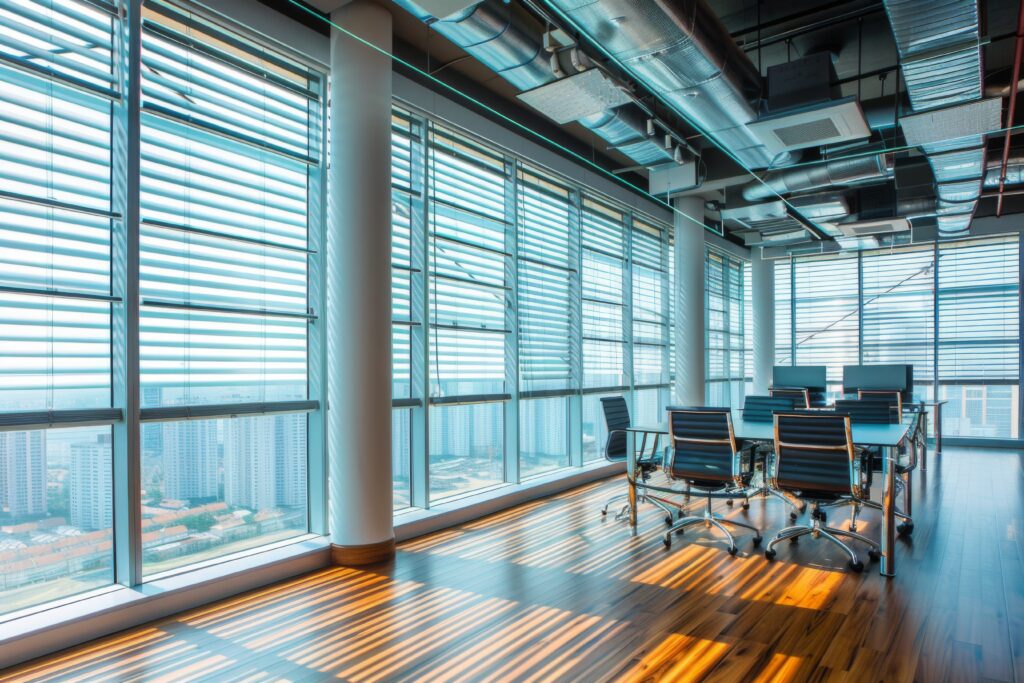
The installation of commercial blinds should be treated as a specialized ergonomic adjustment, similar to positioning a monitor or adjusting chair height.
The principle of controlled daylighting
The goal is not to eliminate natural light entirely—which can negatively impact mood and alertness—but to control its intensity and direction. The right blinds fitting service can use highly technical materials to diffuse harsh direct sunlight, transforming it into soft, usable ambient light. This soft light illuminates the workspace without washing out screens or causing uncomfortable hot spots. This strategic approach ensures the content (workspace) is easy to process for the human reader (employee).
Integrating blinds into workstation ergonomics
A key aspect of workstation ergonomics is the distance and angle between the employee and the screen. Glare often forces employees to lean in, squint, or twist their necks, causing musculoskeletal problems. By eliminating glare through effective shading, employees can sit correctly and maintain the intended ergonomic posture provided by their furniture. This demonstrates that the company offers genuine, long-term value added beyond the obvious.
Take a look at: https://kellysblinds.co.uk/commercial-blinds/
3. Selecting the right solution: filtering vs. blackout
The optimal choice depends entirely on the function of the room and the type of work performed. An expert provider should perform an audit to match the material to the requirement.
Light-filtering blinds: the gold standard for general offices
For most general office areas, light-filtering roller blinds or screen fabrics are the ideal choice. These materials are semi-transparent and designed to allow natural light while blocking UV rays and diffusing glare. They maintain an essential connection to the outside world, which is beneficial for mental well-being, while providing the necessary visual comfort for working on computers.
Blackout blinds: essential for specialized environments
Blackout blinds are essential for rooms requiring total darkness, such as multimedia presentation rooms, data projection centres, or labs. While they block all light, a truly professional installation ensures no light seeps in through the sides, which is often a challenge with low-quality fittings. Choosing the right classification helps the reader (the client) make an informed purchasing decision.
4. The value of expertise: going beyond the product
A successful project is dependent on the Expertise of the fitter and their ability to plan and execute the installation with minimal fuss.
Technical expertise in fabric specifications
A reputable supplier has Expertise not just in installation, but in the technical specifications of textiles, understanding light transmission ratios, and fire safety ratings. They should be able to precisely calculate the required opacity for a room based on the window direction and typical work hours. This level of detail confirms their status as an authority in the field.
